Fighting for the rights of immigrant workers

Fair Work Center fights for the rights of immigrant workers every day. From our know your rights trainings and free legal services to our partnerships with immigrant community organizations, we stand with low-wage, immigrant workers fighting for their rights on the job.

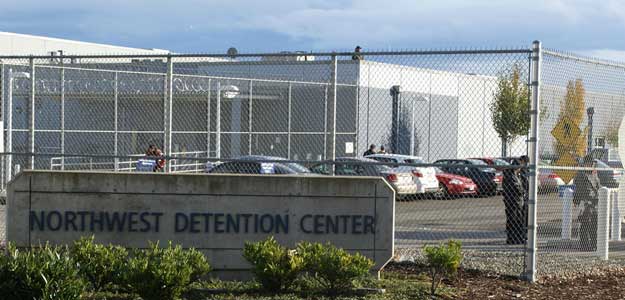
Recently, we joined the fight for immigrant rights that has been raging for years at the Northwest Detention Center (NWDC) in Tacoma. The NWDC is a privately-operated, for-profit prison that contracts with the federal government to detain community members fighting their immigration cases. It is operated by the GEO Group, the 2nd largest private prison company in the country. GEO has long been under fire for the NWCD’s abysmal conditions and mistreatment of detainees, including those whose labor keeps the detention center running. GEO pays these detainee workers just $1 a day, even though Washington minimum wage is $12 an hour. For the record, $1 a day at the state minimum wage buys you about 5 minutes of work. GEO’s entire business model relies on stealing at least 91% of detainees’ wages, all while generating more than $2 billion in annual revenue. 

In September 2017, Washington Attorney General Bob Ferguson sued GEO Group for failing to pay detainee workers the state minimum wage. This summer, the Fair Work Center was asked to support the lawsuit by filing an amicus brief due to our expertise in enforcing minimum wage protections for Washington workers. An amicus brief is the legal term for providing expertise, information, or other insights to the court to aid in a case that isn’t your own. You can read the brief we filed in support of the Attorney General’s case here. In it we argue that Washington’s wage and hour laws apply to all employees, that wage theft is rampant in our economy, and that GEO is committing wage theft from detained workers. 

This lawsuit is about the value of work, and specifically the value of immigrant work. Immigrant workers, even detained immigrant workers, have the right to the legal minimum wage for their work.

As we argue in the brief, “wage theft is a systemic problem that disproportionately impacts vulnerable low-wage workers.” There probably isn’t a more vulnerable worker than a detained immigrant who faces deportation – but all employers in Washington have to follow the law, and all employees in Washington are covered.  By calling out GEO’s particularly egregious acts of wage theft, Attorney General Bob Ferguson’s lawsuit has the potential to put all employers on notice: no worker is ripe for exploitation in Washington, which is why Fair Work Center is proud to be lending our expertise to support the suit in this way.

Read the full amicus brief here, and remember to contact Fair Work Center if you or someone you know is having their rights violated at work.


PS – We are seeking third-year law students or recent law graduates interested in applying for public interest fellowships with Fair Work Center beginning in fall 2020, including Skadden, Equal Justice Workers, Justice Catalyst, and other independently funded programs. Learn more here!

New rights for domestic workers take effect July 1!

DYK? July 1 marks the effective date of the Seattle Domestic Workers Bill of Rights. This legislation was a huge win for the thousands of nannies, caregivers, house cleaners, and landscapers who have long operated in the shadows of our federal, state, and local labor standards. We’re proud of all the work our sibling org, Working Washington, did in collaboration with the Seattle Domestic Workers Alliance to win this landmark legislation.

Beginning Monday July 1st, nannies, house cleaners, home health care workers and other domestic workers get the basic rights and benefits every worker needs — including power on the job.

Ends the exclusion of these workers from basic labor standards:

  • Covers all part-time, full-time, independent contractors, and live-in domestic workers in the city — regardless of whether they are employed by an agency or a family.
  • Applies Seattle’s minimum wage to domestic workers, regardless of whether they are classified as employees or contractors.
  • Ensures all domestic workers receive meal and rest breaks, with provisions for those circumstances when breaks may not be feasible.

Provides important new rights and protections:

  • Ensures live-in workers get at least one day off out of every seven days worked.
  • Forbids employers from keeping a worker’s original documents, like passports or driver’s licenses.
  • Strengthens anti-retaliation protections for domestic workers who stand up for their rights.

Establishes a new model of worker power:

  • Establishes a Domestic Workers Standards Board which includes workers, employers, and community representatives and has the power to effectively set industry-wide standards.
  • Mandates that the standards board will address wage standards, portable benefits, hiring agreements, training, paid time off, outreach & enforcement, and other issues as they arise.
  • Gives the board real power by requiring City Council to act on the board’s recommendations within 120 days.

When the Fair Labor Standards Act was passed in 1938 it provided workers with the right to a minimum wage and 40-hour workweek, as well as overtime pay for extra hours over 40. But not all workers. Domestic workers, home health care workers, and farm workers were all excluded because of racism – that is, in order to get the support of Southern Democrats in Congress, the bill excluded these jobs done almost entirely by black and Latinx/Hispanic workers. Farm workers and home health care workers eventually won minimum wage but not overtime pay. Seattle’s Domestic

Health & Safety in Yakima Valley

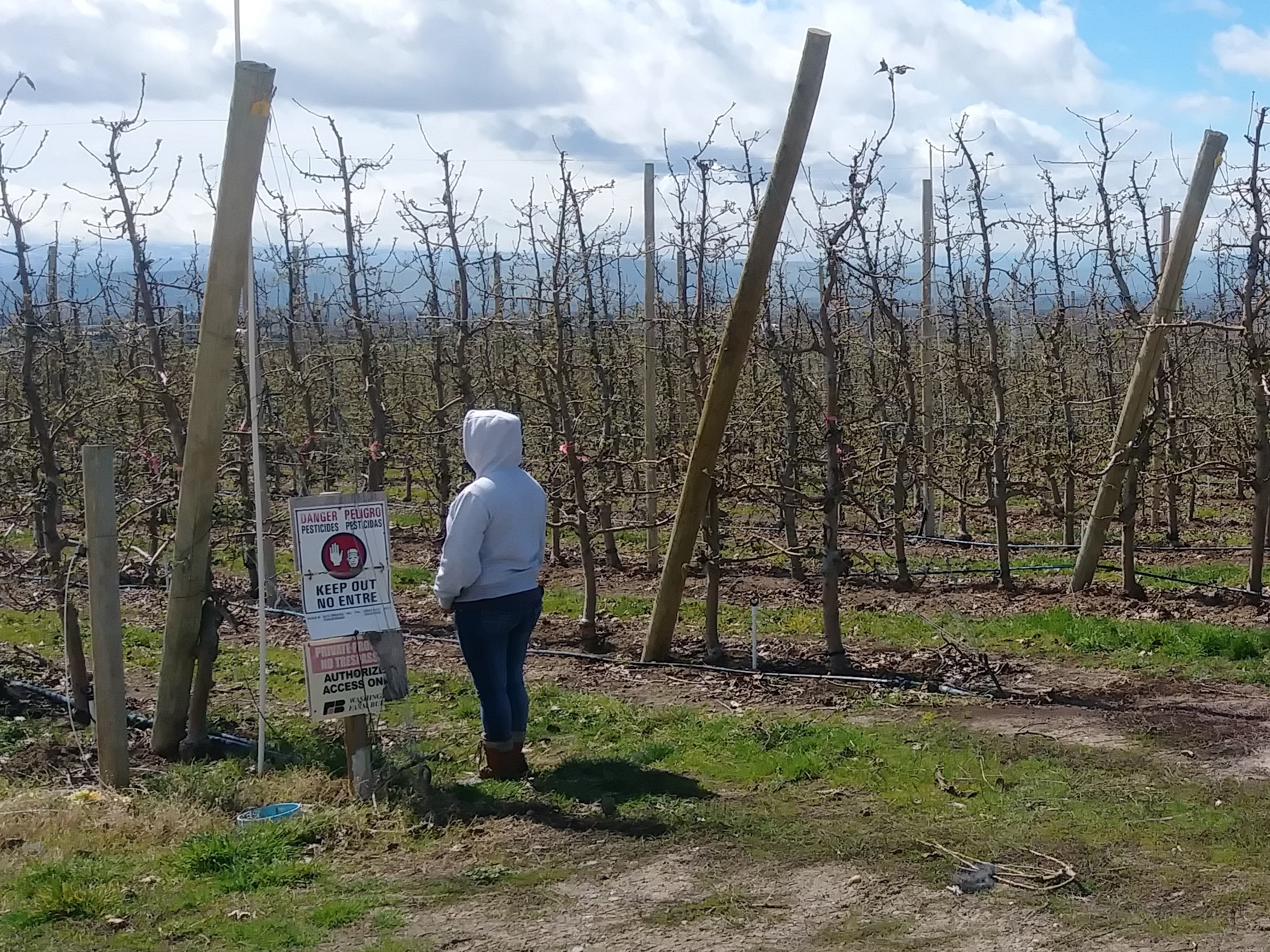
Julia is a Mexican immigrant who works as an apple picker in Washington’s Yakima Valley. Recently, Julia’s supervisor instructed her to tend to a section of apple trees in a field that had been sprayed with pesticides only days before.

Pesticide exposure is a major occupational hazard for farmworkers and their families. In fact, pesticide exposure is attributed to higher rates of health problems among farmworkers’ children, including leukemia and cancer, because parents come home with pesticides on their skin and clothes and expose their children.

Julia knew she shouldn’t have to work in the recently sprayed field, but she didn’t know what to do about it – until she talked to Ricardo, an outreach and education specialist with Fair Work Center & Working Washington.

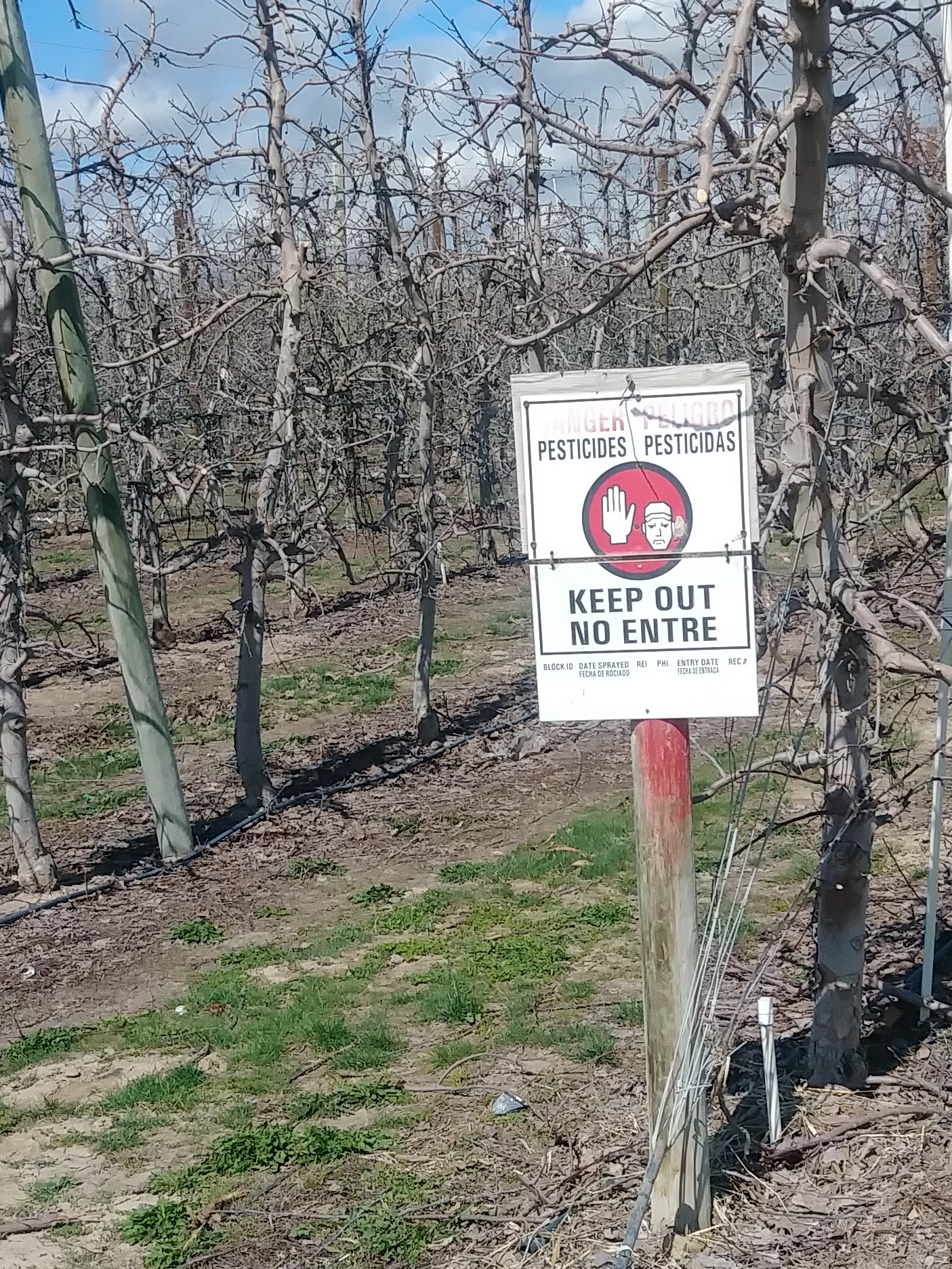
Julia contacted Ricardo after hearing him on a local Spanish radio call-in show. Julia took Ricardo to the field she was instructed to work in and they took pictures of the signs warning people to stay away because of pesticides.

Together they filed a complaint with Washington’s Department of Safety & Health (DOSH). DOSH confirmed that Julie and her coworkers shouldn’t be working in that field and instructed her employer not to send workers there.


León works in a commercial kitchen located in a grocery store in Yakima.

Conditions in the kitchen were miserable, especially since the air conditioner and other kitchen equipment was broken. Ricardo also supported León in filing a complaint with DOSH, who sent an inspector to verify the broken air conditioner and other equipment. The inspector filed an official request for the grocery store to fix the broken equipment, which they have since done. And, while the inspector was on site, he spoke with León and his coworkers and learned they were also being discriminated against because they are immigrants, so he supported them in filing complaints with the Washington Human Rights Commission.

Now, thanks to Fair Work Center and Working Washington’s presence in the region, Leon and his coworkers are working in a safer and healthier workplace, and are happier too since they are no longer being harassed and discriminated against at work. 

Our presence in the Yakima Valley is possible in part due to funding from the DOSH Safety & Health Investment Project.

Your top 6 rights at work in Washington — in under 60 seconds!

On this May Day, we celebrate workers and their incredible contributions to society as we know it today. In honor of the original fight for one of the first workplace standards – the 8 hour workday – we bring you this new video: “Your top 6 rights at work in under 60 seconds.”

Check it out and share it on social media, help us get ensure all workers know their rights at work.

#1 Minimum Wage & no wage theft: at least $12/hr, higher in some cities — Not being paid the minimum wage or for all of your time spent working are common forms of wage theft.

#2 Paid Sick Leave: You earn at least 1 hour of sick leave time for 40 hours you work. — You can also use your leave time for issues related to domestic violence, sexual assault, or stalking.

#3 Overtime: 1.5x pay for hours worked over 40 in a week — Not applicable to OT exempt workers — Not getting overtime pay is a common form of wage theft

#4 Meal & rest breaks: 10-min paid rest break for every 4 hours worked; 30-min unpaid meal break for 5+ hour shifts — Not getting meal or rest breaks is a common form of wage theft

#5 No harassment & discrimination on the basis of race, sex, gender, age, sexual orientation, religion, nation of origin, or disability.

#6 Healthy & safety in the workplace

CONTACT US IF YOU YOUR RIGHTS ARE BEING VIOLATED OR YOU HAVE ANY QUESTIONS!
1-844-485-1195 | help@fairworkcenter.org

Su & Us: Enforcing the minimum wage

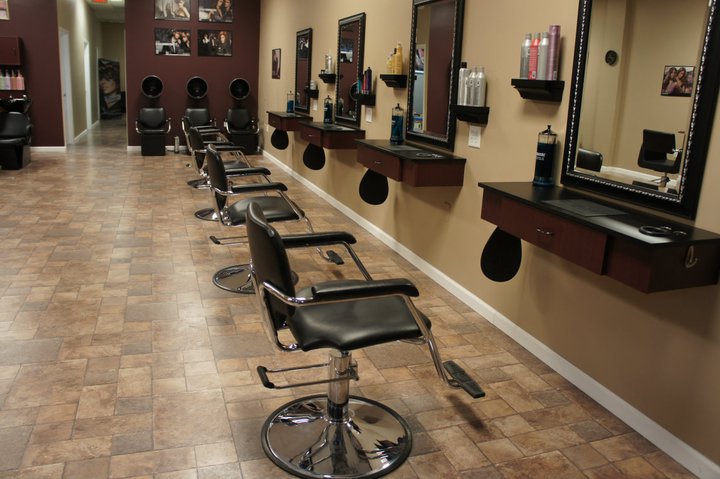
Su, a Korean immigrant who worked as an assistant to a hairdresser in Bellevue, answered phones, greeted customers, swept up hair, and provided tea and snacks. She worked 45 hours per week but was paid just $1,000 per month, less than $5.50 per hour. Her employer thought that she could take advantage of Su and her desire to break into the personal care industry, telling her that she was not an employee but an “independent contractor.”

Su knew this was unfair and was referred to the Fair Work Legal Clinic by 21 Progress, one of our Fair Work Collaborative partners. The Legal Clinic represented Su, filing a charge of wage theft on her behalf with Washington’s Department of Labor and Industries (L&I).

L&I initially found that Su’s employer must pay $2,000. But Su brought in her records showing that she was actually owed double that amount. L&I agreed and ordered Su’s employer to pay the full $4,000 she was owed. Su is thrilled with the result and we are thrilled that we could support Su in standing up for her right to a fair wage. That said, L&I could and should have gone further in cases like Su’s.

Unfortunately, in the majority of its cases, L&I does not require that employers pay interest when paying back wages stolen from their workers’ paychecks. This means that if L&I orders payment a year after the theft happened, the employer gets to use the worker’s money during that whole time. This is like an employer taking an interest-free loan from its employees’ paychecks. Meanwhile, low-wage workers – who are disproportionately women, people of color, immigrants and refugees – have the pay the interest on credit card debt or payday loans just to get by. This isn’t right, and Fair Work Center will continue to advocate that L&I must include interest in these wage and hour cases.

If you think you are not being paid the minimum wage, or what you are owed, please call our hotline at 1-844-485-1195, email us at help@fairworkcenter.org, or fill out our our web-form.

Overtime for Nonprofit Workers?!? Join us Wednesday 1/23 for a conversation about nonprofits and restoring overtime rights

Washington State could act to restore overtime rights to hundreds of thousands of salaried workers in our state — including thousands who work long hours for low pay at nonprofits.
Nonprofit staff, board members, managers, volunteers, and donors are invite to join Vu Le of NonprofitAF and Rainier Valley Corps fame, Misha Werschkul of the Washington State Budget & Policy Center, Laura Pierce of Washington Nonprofit Association and Rachel Lauter of Working Washington and Fair Work Center for an online conversation about:

What’s going on with overtime rules

What’s at stake for workers and communities

How updated overtime rules could affect your job, your nonprofit, and your mission… for the better!

Lunch & Learn: Nonprofits & Overtime Rights
Wednesday, January 23, 2019
12:00 pm
Online on Zoom and in person at Southside Commons in Columbia City (map)
Nonprofits have a key role to play in this conversation. Join us Wednesday to learn more about the issue and what’s next.

This raise was brought to you by fast food workers

No single group has done more to raise standards for low-wage workers over the past decade than low-wage workers. It’s easy to take for granted the annual increases to the minimum wage in Washington, Seattle, SeaTac, and Tacoma that just occurred last week on January 1st. It’s easy to forget how we got here, and just as importantly, who got us here.

In late 2012, Working Washington began organizing in SeaTac with the idea of making every job at the airport a good job. Those efforts resulted Proposition 1, a ballot initiative passed in November of 2013 which raised wages to $15/hour with annual adjustments for inflation for airport and hospitality workers in SeaTac. It also provided paid sick days and provisions that gave workers opportunities for more hours and ensured they received all the tips or service charges they earned.

Six months later, hundreds of fast food workers with Working Washington in Seattle launched strikes across the city, calling for $15 for all workers across the city. Prior to the first strikes, the only fast food workers you heard from in the media were actors in commercials, but through their courageous action, these low-wage workers sparked a citywide debate about the poverty-wage economy and the future of work in Seattle. Despite initially being dismissed as unrealistic by nearly everyone, Seattle’s Fight for $15 was soon embraced by the public and a wide spectrum of leaders in the city.


Check out this video, “Walking Out Into History” for more on the epic win of $15 in Seattle.

The speed and scale of the shift was extraordinary. Workers continued agitating after those first strikes, with additional strikes, a march from SeaTac to Seattle, and a number of creative street actions to turn up the heat on local elected leaders to act. And in less than six months of high profile actions, a $15 minimum wage was a major plank of both mayoral candidates’ platforms and everyone, from City Hall to workplaces large and small, was talking about the inevitability of raising the minimum wage. On May 1, 2014 – just one year after those first fast food workers took to the streets – Mayor Ed Murray announced a proposal to increase Seattle’s minimum wage over the course of the next seven years to $15 or higher for all workers. The rest, as they say, is history.

Fair Work Center comes out of this history. We were founded shortly after $15 was established in Seattle in order to ensure that the new minimum wage – as well as other progressive labor standards workers won like paid sick and safe leave and fair chance employment – was enforced and that workers were getting paid the wages they fought for.

Today we provide know your rights education to thousands of workers each year. We support hundreds of workers in exercising their rights through our legal clinic. And we are partnering with Working Washington to build lasting power for low-wage workers across the state.

For more information on the minimum wage or your other rights on the job, to learn how to access our free legal clinic or arrange a know your rights training in your community, check out www.fairworkcenter.org.

337,100 people got a raise on Tuesday!

This week, an estimated 337,100 workers in Washington got a raise thanks to Initiative 1433, which raised the minimum wage across the state to $12.00/hour on January 1. This year’s raise represents more than $250 million in annual wages for the people who need it the most – and who are more likely to put it back into their local economies.

Some cities in Washington have even higher minimum wages. Here are the local minimum wages for 2019:

Washington: $12:00/hour
Seattle, big companies & chains (501 or more employees worldwide): $16.00/hour
Seattle, smaller companies & chains (500 or less employees worldwide)…
…Where workers earn $3/hour in tips and/or health benefits: $12.00/hour
…Where workers earn less than $3/hour in tips and/or health benefits: $15.00/hour
SeaTac (for hospitality and airport workers): $16.09/hour
Tacoma: $12.35/hour

Wondering what you’re owed? Check out whatsmywage.org, a tool from from our sibling org, Working Washington, that walks you through a quick form to figure out your minimum wage.

According to the Economic Policy Institute, Washington was one of 19 states raising the minimum wages on January 1, meaning wage increases for more than 5 million Americans.

Thanks to all the workers in Washington and across the country who fought for and won these raises to the minimum wage!

For more information on the minimum wage or your other rights on the job, check out www.fairworkcenter.org.

Join us for the Future of Worker Power!

Please join us in shaping the future of worker power on November 1, 5:30-7:30pm at WithinSodo (map). Fair Work Center and Working Washington are joining forces to build a powerful, sustainable and scalable worker organization to advance worker and economic justice in Washington and beyond. Join us in celebrating this alignment and raising funds to fuel the 21st Century workers movement.

We are excited to announce our special guest speaker, Washington Attorney General Bob Ferguson. In addition to his strong resistance to the Trump administration, Bob is a tireless champion for working people in Washington, and we are thrilled he will be joining us.

RVSP online today!

The suggested ticket price is $50, but there is a sliding scale so you can pay what makes the most sense for your budget.

If you have any questions, please contact Hannah Cole (hannah@workingwashington.org).

We look forward to seeing you on November 1st!

RE: ATTORNEY GENERAL BOB FERGUSON’S ANNOUNCEMENT REGARDING “NO POACHING” PROVISIONS

July 12, 2018
[Cross-posted at workingwa.org/media]

The following remarks were made by Rachel Lauter, Executive Director of Working Washington and Fair Work Center, in regard to Attorney General Bob Ferguson’s announcement that to avoid a lawsuit, seven fast food corporations will remove “no-poach” provisions from their franchise agreements:

IMG_2094.JPG

“Workers who fight to raise their pay or take on wage theft and other workplaces issues are often dismissed and told to ‘get a better job’.

These ‘no-poaching’ agreements show that employers sometimes make it harder for worker to get that better job. They make it harder for workers to improve their circumstances. They stand in the way of opportunity.

But today that’s coming to an end.”


The following comments were made by Working Washington member Merlee Sherman, who works as a courier for Jimmy Johns:

IMG_2097.JPG

“I’m a driver and a manager in training at Jimmy John’s, and what these no poaching clauses actually look like is suppressed pay and limited mobility for people within the company.

There has not been mobility for me to receive better pay at another Jimmy John’s based on my experience. There have not been options for me to go to another store and receive a better wage. All of those have been limited within the company itself.

Today’s settlement is a giant step for those of us who want to use our skills. Food education in general is my niche, it’s my passion, it’s my career. I want to share my skills with those coming into the food industry and I can’t do that if I can’t put food on the table.”