
Below are some recent examples of cases.
Fighting for 1,400+ Workers
Bosses that take advantage of their own workers are all too common in the food service industry. For workers at the Moctezuma’s restaurant chain that often meant that their bosses worked them so hard preparing and serving food that there was no chance to take a break even when working double shifts.
In June 2022, our legal clinic and co-counsel Shroeter Goldmark Bender filed a class action lawsuit in King County Superior Court on behalf of more than 1,400 workers who refused to accept the boss’ mistreatment and disrespect as business as usual.
After we filed the lawsuit, the company decided to negotiate to settle the case. In June 2023, the court approved an $850,000 settlement for the workers.
Fairness for Rouan
Rouan Chen worked at two dumpling restaurants in north Seattle, places where the promise of honest work turned into a daily struggle. Like too many workers in the restaurant industry, Rouan faced a frustrating mix of wage theft: unpaid overtime hours, tips that never made it to his pocket, being forced to do work off the clock, and patchy and unreliable access to his sick leave when he was feeling unwell. These aren’t isolated incidents or the exception to the rule; they’re part of a widespread pattern where bosses exploit workers, hoping complaints stay scattered and unresolved.
In 2023, Fair Work Center and Rouan made a plan to fight for his rights at work. We filed a complaint in King County Superior Court, demanding the fair treatment and pay he deserved. The boss chose to negotiate instead of continuing through the courts. We reached a settlement that recognized the wrongs Rouan endured and secured a meaningful victory on his behalf.
Four Workers Stand Up
Four workers at Musashi Inc., a Seattle-area sushi restaurant, stood up against their boss who routinely ripped them off by stealing their tips, violating their rights to meal and rest breaks, and committing wage theft by not paying them for all the hours they worked.
In 2020, our legal clinic and co-counsel Breskin Johnson Townsend, PLLLC filed a lawsuit on behalf of the four workers and were able to negotiate a settlement on their behalf.
Three strikes don’t make this dismissal right
Imagine toiling outdoors under the scorching sun to put food on the table and, despite your hard work, being attacked by the boss for who you are. A group of 7 field workers at Borton, one of the mega farms in Yakima, stood up after being mistreated by a supervisor. The boss demeaned some workers for being women, for having darker complexions, for appearing to have indigenous ancestry, and based on religion. Older workers, who brought years of experience to the orchard and were trying to do their job well, were berated for working too slowly for the boss’ liking. Anyone who dared to raise a complaint was punished for it.
In 2023, our legal clinic filed charges with the EEOC on behalf of the group of workers. In the end, the company chose to negotiate a settlement and the workers won $200,000 and new protections for the workplace, including improving the complaint procedures to prevent retaliation and permit complaints outside the chain of command.
A balancing act: standing up for herself & keeping her job
 Gabriela is a Mexican immigrant who works at a Mexican restaurant. She contacted Fair Work Center after a cook, who she did not get along with, put an extremely hot pepper in her salad without her knowing. She raised this issue with her supervisor but no action was taken; the cook was not warned, disciplined, or otherwise put on notice of his behavior. So she took it up to a higher level of management and asked for their help. Gabriela was then written up by her immediate supervisor for going over his head to management, even though her immediate supervisor ignored her complaints.
Gabriela had been working at that restaurant for more than 10 years. And in that time, Gabriela’s schedule remained relatively consistent. Yet as soon as she started to raise concerns over her coworker’s aggression towards her, her schedule changed drastically. Not only were her work hours reduced, but she was scheduled to work “clopening” shifts, where she was required to close one day and open the next. She feared she would soon lose her job entirely.
She was referred to Fair Work Center by one of our community partners, and we provided Gabriela about her workplace rights and advised Gabriela about retaliation. We also discussed ways for her to effectively address her concerns with her employer. Gabriela left the clinic feeling empowered to talk to her employer to address the retaliation and to request that her schedule return to what it previously was. After speaking with her employer, she got her old schedule back. In addition, the problematic cook was transferred to work at another location. Gabriela felt relieved to no longer be working with that cook but still had concerns about her personal safety, given the cook’s strong dislike of her. We provided her with information and resources on how to file for a protection order.
Putting tips back on top
 Working WA, our sibling organization, has been organizing gig workers (i.e., people who work for app-based companies like Postmates, Instacart, and Doordash) for the past couple of years. Last fall, Mia, a worker on the grocery delivery app Instacart and leader on Working WA’s gig economy campaign, raised the alarm about major pay cuts on Instacart. She and her coworkers were getting paid 30-40% less for each job, the company was using a black-box algorithm to set pay. And what’s more, they were taking customers’ tips instead of passing them on to workers.
When a customer tips, it is generally understood as extra money for the service provided by the worker. But Instacart was just paying the worker less and pocketing the tip. Here’s how it worked. An Instacart shopper might agreed to take a job that promised $10. The customer who made the order agreed to a $5 tip for the work. But instead of that worker getting $15, Instacart used the tip to subsidize the amount they paid the worker for the job.
Working WA started a petition demanding better pay, no more tip theft, and a more transparent pay system for Instacart’s workers. In a few short weeks it was signed by more than 3,500 gig workers and customers outraged by Instacart’s shady pay practices. Workers and customers were standing up and speaking out, and the media took notice. Bloomberg News did a piece on the petition, which generated even greater attention to the petition and generated even more news stories and social media outrage among gig workers and customers alike.
The tremendous weight of public outrage in combination with the power of gig worker’s organizing forced Instacart to put tips back on top of pay. But the change Instacart made wasn’t enough – they’re still paying workers too little and their pay stubs are still a mystery. And these problems aren’t limited to Instacart workers. Gig workers on all apps are facing low pay and lack of transparency. So they are continuing to organize and a national campaign called #PayUp to demand $15 plus expenses for each hour they work, tips on top, and pay transparency.
Catering company forced to take racism off the menu
 Jane was a line cook for a catering company that provides food service to colleges. Jane loved her job, the interaction with the students especially. And she was good at it, churning out all of the food that came from the grill. The Executive Chef however made it impossible for her to stay there with unrelenting racially-motivated comments. Jane did everything she could, informing her superiors and human resources, but it didn’t stop. Jane stayed another three months, but eventually she found it too difficult.
We filed a charge of discrimination and a suit to recover wages, and met with the employer at mediation. There, the employer agreed to pay our client to compensate for the trauma caused by their employee and, importantly, agreed to change their policies and provide enhanced training to supervisors and staff.
Though she has a culinary degree, Jane had left cooking after this experience. With the damages recovered from the company, and she dreams of opening her own restaurant.
Wage theft at Emerald City Fence
 Dan learned about Fair Work Center from the Washington Department of Labor & Industries (L&I) after attempting to make a complaint about his former employer, Emerald City Fence, a statewide fencing company. This company had a practice of deducting an hour of time from each employee’s pay, regardless of how many unpaid or paid rest and meal breaks the employee took. Because all employees at the company were victims of this wage theft, L&I recommended that Dan talk to Fair Work Center to see if he could make a claim for all his co-workers.
We immediately recognized the magnitude of the problem and agreed to work with Dan and his coworkers. Working with Breskin Johnson & Townsend, a local plaintiff’s employment firm and longtime supporter of Fair Work Center, we recently filed a class action case against Emerald City Fence.
404 error – paychecks not found
 Jenna worked for a small tech start-up company. She enjoyed the work, but she started noticing issues with the company’s funding. At first, Jenna was patient with her delayed paychecks because she understood funding for a start-up is not always steady. However, the issue quickly escalated from receiving her paychecks late to not receiving compensation for months at a time. Eventually, Jenna’s employer failed to pay her for 12 pay periods for a total of $19,963.69.
This is when she came to Fair Work Center where we are currently supporting her in pursuing a wage complaint through L&I.
If your employer is training you, they should be paying you
 Said worked as a driver for a transit company. He was required to do 120 hours of training and promised pay at his hourly rate.
Said came to the Fair Work Center after the employer failed to provide him any pay for the training. We provided Said with information about his rights and walked him through his options. Said decided on a small claims lawsuit. When his employer caught wind of it, the employer sent him a check for half the amount owed, promising the rest soon. Said thought about delaying his filing but, when the check bounced, he realized that he should keep going.
With our support, Said’s small claims case is underway in King County District Court.
The Queen Mary Tea Room gets on board
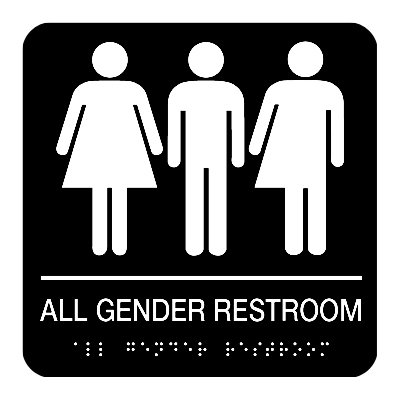 Coleman worked as a server at the Queen Mary Tea Room in North Seattle. Coleman, who is non-binary, noticed that the Tea Room maintained gender-exclusive bathrooms, with “ladies” and “gentlemen” written on the outside of each door. Indeed, the tea room had been cited by the Seattle Office for Civil Rights several times for violation of Seattle’s Public Accommodations Ordinance, which, among other things, requires all single-occupant restrooms to be gender-neutral restrooms. After each citation, the owner took down the signs, but moved them from the outside to the inside of the door or replaced them with pink and blue ribbons. Coleman raised this concern with the management, but nothing was done. Soon after, Coleman was terminated. Fair Work Center filed suit on Coleman’s behalf and negotiated a settlement by which the Queen Mary Tea Room compensated Coleman, agreed to change its practice and hosted a staff training on sexual orientation and gender identity discrimination by LGBTQ Allyship, one of our collaborative partners.
Wage theft at a residential construction company
 Martin served as a foreman at a residential construction company. Most of the workers on his crew primarily spoke Spanish, and because Martin was more fluent in English, he served as a communicator with the employer to determine and secure payments for the jobs his crew worked. These contracts between the workers and the employer were oral and based in trust that both sides would uphold their end of the deal. This trust was broken when the employer refused to pay Martin and his peers for their work.
Unfamiliar with the law and unaware of any legal recourse available to him and his coworkers, Martin came to Fair Work Center worried that he would not be able to secure payment for their work. This money was essential to their livelihood. We assisted Martin in preparing a demand letter and filing his case in small claims court. The week before his scheduled court hearing in September, the employer paid Martin and his coworkers everything they were owed. Just as we are certain that Martin will continue to stand up for his fellow workers with the information he learned from visiting Fair Work Center, we are certain that his former employer will think twice before trying to exploit its employees again.
Local Montessori school learns a lesson
 Leslie has been a teacher for most of her career. Recently, she took a job as an assistant teacher at a Montessori school in King County. She initially contacted Fair Work Center with questions about her employee handbook. Specifically, she wanted to know if she was entitled to receive pay for a week-long vacation. While looking through her paychecks, we discovered inconsistencies with nearly every one. She worked for the Montessori school for several months, but only one of her paychecks in that time was accurate. We calculated a total of 84.5 hours of missing wages, equivalent to nearly $2,500. We helped Leslie file a case in small claims court this fall, and we will be supporting her throughout the process.
Cleaning up
 An undocumented immigrant looking for work, Beatriz was excited to take a job cleaning apartments in an affluent Bellevue neighborhood. Soon after she was hired, her employer doubled the number of apartments she needed to clean each day, regardless of how long it took. Beatriz tried but quickly found it was impossible to complete her duties without working a 12-hour shift, something she could not do as a mother with children at home.
When she tried speaking up about her workload and asking for a raise to compensate for the extra work, her employer cut off communication and disappeared without ever paying her for the days she already worked. Unsure of her rights and concerned about retaliation from the employer with regard to her immigration status, Beatriz came to Fair Work Center to learn what protections she had and how she could get paid. After discussing her options, we assisted Beatriz in gathering evidence and filing a complaint with L&I. Two weeks later, L&I informed her that her complaint was processed, and she would be paid the $602 in wages she was owed.
Delivering justice for delivery driver
 Yakub first came to Fair Work Center in 2017. As a delivery driver for a small company that contracts with Amazon and others, Yakub started his day bright and early and worked long hours, but he enjoyed his work. Unfortunately, trouble struck soon after he started. He received a ticket because his employer’s van did not have proof of insurance. Instead of paying for the ticket or working with Yakub, the employer tried to put the responsibility on him. In addition, the employer refused to pay him his final paycheck of more than $1,000. We helped Yakub assess different options for getting paid and assisted him in filing his case in small claims court.
He returned recently, almost a year later, with great news – he received a small claims judgment for almost $2,000! The payment covered his final paycheck, the ticket, and associated filing fees. But he also had some bad news. The employer was refusing to pay him and he had no idea how to get his money. By researching the different methods of collecting on a judgment, we helped prepare and file a writ of garnishment against the employer, thereby allowing him to collect the money he was owed.
Hotel worker stands up for health & safety
 Lucie is a housekeeper at a hotel in Seattle. Her employer failed to comply with the Hotel Employee Health and Safety Initiative, which limits the amount of cleaning work hotel workers can be required to do in a shift. Not surprisingly, she was injured as the result and asked for light duty while she recovered. The hotel refused her request and, instead, fired her.
Lucie came to Fair Work Center distraught having lost her income, health insurance, and the ability to pay her mounting medical bills. We recognized that Lucie’s immediate medical needs could be covered by workers’ compensation insurance, so we assisted Lucie in filing her claim with the Washington Department of Labor & Industries (L&I). We also connected Lucie with the Seattle Office of Civil Rights to make a complaint of disability discrimination for the hotel’s failure to accommodate her disability and termination. Finally, we connected Lucie with advocates for hotel workers, and we will continue assisting her as needed in addressing the hotel’s ongoing violations of the initiative.
Older cases
Chunso was an employee of a popular restaurant in Seattle. Her employer retained 40% of her tips. Additionally, the employer failed to provide rest or meal breaks to its servers and to the back of the house workers. Chunso learned about her right to rest breaks from one of our trainings and then raised the issue with the restaurant. She also filed a charge with the Office of Labor Standards. The employer terminated her employment citing her “attitude.” In collaboration with OLS, the Clinic took the case and will be representing Chunso in a lawsuit against the employer. We have been able to identify other workers at the restaurant who will also be plaintiffs. We have also learned that this restaurant consistently employees undocumented workers in its kitchen with the promise of “sponsorship” on their application for work authorization. But that promise never materializes, even after years of sub-standard employment. We are working to connect with those back of house workers to provide immigration support as well as to let them know of their employment rights.
Ahmed, a Somali man who works for a hotel in Seattle, came in to the Legal Clinic after being injured on the job. After his first injury, he had requested a reasonable accommodation from the hotel, and his supervisor denied his requests and then made derogatory comments about his English. He also cut Ahmed’s hours. Ahmed tried to continue working without an accommodation but was injured two more times over the course of the following six weeks. The Legal Clinic helped Ahmed file a complaint with Seattle Office for Civil Rights, which is now investigating his case. In addition, the Legal Clinic helped him file a worker’s compensation complaint with Washington Department of Labor & Industries. The worker is now receiving pay for time lost while he is out of work recouperating.
Min worked as an educator at a childcare center in Seattle and came to Legal Clinic wanting to recover her last two weeks of pay. In speaking with Min, we quickly realized that she had been underpaid for the last year-and-a-half. We expect to resolve this with a demand letter to the employer.
Maria works at non-profit preschool as a teacher assistant in Seattle. She has preexisting medical conditions that requires her to take time off during shifts to go to doctor appointments. The lead teacher is very hostile to her, calling her names, making fun of her skin color, and physically accosting her on the school’s playground in front of the children. Her employer refused Maria’s request to reassign her to a different classroom away from her abusive lead teacher. The Fair Work Legal Clinic helped the worker file a complaint with Seattle Office for Civil Rights, which is now investigating the matter. We also connected Maria to an attorney who will be representing her without charge.
Ray works for a large property management company and is assigned to several apartment complexes in Seattle. He was paid a flat rate for 20 hours per week, regardless of his actual hours, and he got no meal or rest breaks. His employer failed to provide paid sick and safe leave time, and when Ray got sick and took time off, he was fired. The Legal Clinic will be representing Ray in legal action against his employer.
Roger is an African American man who worked at a marijuana retailer in Seattle as a floor supervisor. He was discriminatorily denied a promotion to manager so he contacted the Fair Work Legal Clinic. The Legal Clinic helped the worker file a complaint with the Seattle Office of Civil Rights. We quickly learned that many other workers had experienced similar discrimination on the job. In addition, we learned that the employer had implemented an invalid tipping policy, and several other workers had been threatened for bringing up the issue. We assisted the worker in filing a charge with Office of Labor Standards (OLS). Roger also mobilized other workers to talk with OLS. And within one week of his complaint, OLS sent a letter to his employer identifying all of the issues and requiring the company prove they are in full compliance with Seattle’s labor standards. The employer has one month to demonstrate compliance or OLS will initiate a full investigation.
Sue and Bob are a married couple who were both fired from their jobs at specialty foods and personal product manufacturer. Sue and Bob filed charges with the Equal Employment Opportunity Commission, alleging a hostile work environment on account of their physical disabilities. They were denied reasonable accommodation for their disabilities and then were fired in retaliation for complaining about the discrimination. In May, we settled both Sue and Bob’s charges with their employer. With the assistance of a pro bono mediator, we reached a resolution whose terms included a monetary settlement and a staff-wide training on discrimination and reasonable accommodation for people with disabilities at the employer.